
Why Is Republic Day Celebrated on 26 January?
The Purna Swaraj Movement and the Choice of 26 January
Event date: 26 January 2026 — 77th Republic Day of India
Republic Day is one of India’s most proudly celebrated national holidays, marking a powerful moment in our history when India became a truly sovereign and democratic republic. On this day, we don’t just celebrate traditions — we celebrate self-identity, law of the land, and the power of collective purpose. In the spirit of mindful living, Republic Day reminds us to live with integrity, freedom, and dignity in all that we pursue — whether it’s earning your own money, building confidence, or living with your own identity. Let’s explore its roots, importance, and how this day uplifts you personally and socially.
Table of Contents
- What Is Republic Day?
- Why 26 January? The Historic Connection
- Before the Constitution — What Rules Governed India?
- The Constitution & Founding People
- How Republic Day Is Celebrated Today
- National Songs, Flag, and Symbols
- Guest Corner (Sources of Truth)
- Final Thoughts — Life Lessons from Republic Day
- FAQs
- Sources & Tools
1. What Is Republic Day?
Republic Day is India’s national day celebrating the adoption of the Constitution, when India became a republic on 26 January 1950 — replacing British-era laws with its own democratic framework.
This means the people, not the colonial power, became the source of authority.
2. Why 26 January? The Historic Connection
In 1930, long before independence, Indian leaders declared Purna Swaraj (complete independence) to reject British rule — and chose 26 January for that proclamation.
When the Constitution came into effect on this date in 1950, we honoured that earlier spirit of self-rule and freedom from foreign law.
3. Before the Constitution — What Rules Governed India?
During British rule, India followed the Government of India Act, 1935. These were British-designed laws, with limited Indian autonomy.
Even after independence in 1947, India still operated under those laws until its own Constitution was ready.
4. The Constitution & Founding People
The Constitution was adopted on 26 November 1949 and took effect on 26 January 1950.
Dr. Rajendra Prasad became the first President of India under the Constitution.
This document gave citizens the power to choose their own government and live with equal rights and democratic freedoms.
5. How Republic Day Is Celebrated Today
Republic Day is known for three main traditions:
Flag Unfurling + Presidential Address:
The President of India unfurls the national flag at Kartavya Path in New Delhi each year.
Grand Parade:
The parade showcases India’s cultural diversity, military strength, and achievements — with tableaux representing states and art forms like Bikaner’s Usta art this year.
Awards & Honours:
Courageous citizens like Group Captain Shubhanshu Shukla and many others are honored for their service on Republic Day.
Time & Rituals:
The parade usually starts around 10:30 AM IST, with flag-unfurling early in the morning.
School marches, patriotic drills, and cultural acts also happen nationwide.
6. National Songs, Flag, and Symbols
🎵 Songs:
- “Jana Gana Mana” — India’s National Anthem (official & respectful recital)
- “Vande Mataram” — National Song, celebrating 150 years in 2026
Flag Protocol:
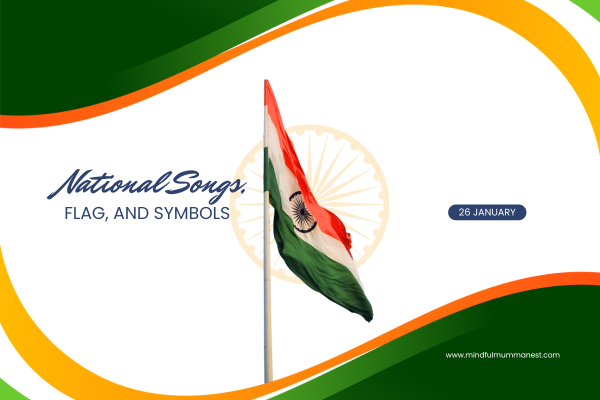
- The Tricolour is unfurled on Republic Day by the President — symbolizing constitutional pride.
- It represents courage (saffron), peace (white), and growth (green).
7. Guest Corner
Big thanks to:
• Wikipedia — Republic Day history & facts — for foundational context.
• Press Information Bureau — for official R-Day parade plan & themes.
• Times of India news reports — for current events & honours.
• Economic Times & local sources — for 2026 celebrations overview.
8. Final Thoughts — Life Lessons from Republic Day
Republic Day isn’t just a national event — it’s a reminder that:
Personal freedom starts with your choices.
Self-identity grows when you build your own path — like earning with confidence, just as you help mums learn to earn with identity on your other blogs like how to earn money mindfully (e.g., earn money while taking care of health or yoga from home).
- Wellness business at home
- Healthy recipes income
- Mindful exercise income
- Yoga income
- Housewives earning from home
- Online earning without investment
- Google Ads income
- Jobs with affiliate collaborations*
Each of these journeys reflects self-governance — just as our nation embraces self-rule through its Constitution.
9. FAQs
Q1: What’s the difference between Republic Day and Independence Day?
➡️ Independence Day (15 Aug) marks freedom from British rule; Republic Day (26 Jan) marks India’s Constitution coming into force.
Q2: Why do we celebrate national songs on this day?
➡️ Songs like Jana Gana Mana and Vande Mataram celebrate unity, pride, and democratic spirit.
Q3: What happens at the Republic Day Parade?
➡️ Military demonstrations, cultural tableaux, dance, arts, and honours for citizens.
Q4: Who unfurls the flag?
➡️ The President of India unfurls the flag at the main ceremony.
10. Sources & Tools (With Quick One-Line Info)
•Republic Day – Wikipedia — Trusted history and constitutional facts.
• Press Information Bureau — Official govt release on parade & themes.
• Economic Times — 2026 Republic Day significance and schedule.
•Times of India news — Latest Republic Day events and honours.
• India Times patriotic songs list — For music ideas on social posts.