Introduction
Dussehra is more than fireworks and rituals. It is a mindful celebration of courage, truth, and the eternal belief that light always triumphs over darkness.
Why These Stories and Rituals Matter Today (A Mindful View)
Other Stories Across India
Why Do We Celebrate Dussehra?
Dussehra, also called Vijaya Dashami, symbolizes the victory of good over evil. Across India, it carries different stories, traditions, and emotions, each rooted in mindfulness and strength.
The Ancient Stories Behind Dussehra
1. The Defeat of Ravana
The most famous story is of Lord Rama defeating Ravana. It represents the victory of dharma (righteousness) over adharma (evil). Effigies of Ravana are burnt to remind us that arrogance, greed, and ego must be destroyed within us.
2. Durga’s Victory Over Mahishasura
In Bengal and Eastern India, Dussehra is the day Devi Durga defeated Mahishasura, the buffalo demon. This victory shows the power of feminine energy, Shakti, and why we should respect and balance power with compassion.
3. Devi Durga’s Return to Her Sasural
In Bengal, Vijaya Dashami also marks Durga Maa returning to her husband’s home (Lord Shiva) after staying with her parents for nine days. This tradition represents love, family bonds, and the bittersweet feeling of farewell.
4. Other Stories Across India
- In some regions, Dussehra marks the end of rainy season and start of harvest, where farmers worship tools and land.
- In Himachal’s Kullu Dussehra, idols of deities from villages are gathered and worshipped together, symbolizing unity and community strength.
- In parts of South India, it is tied to the worship of Saraswati and knowledge, where books, tools, and instruments are honored.
Dussehra Poojan Vidhi (Step-by-Step)
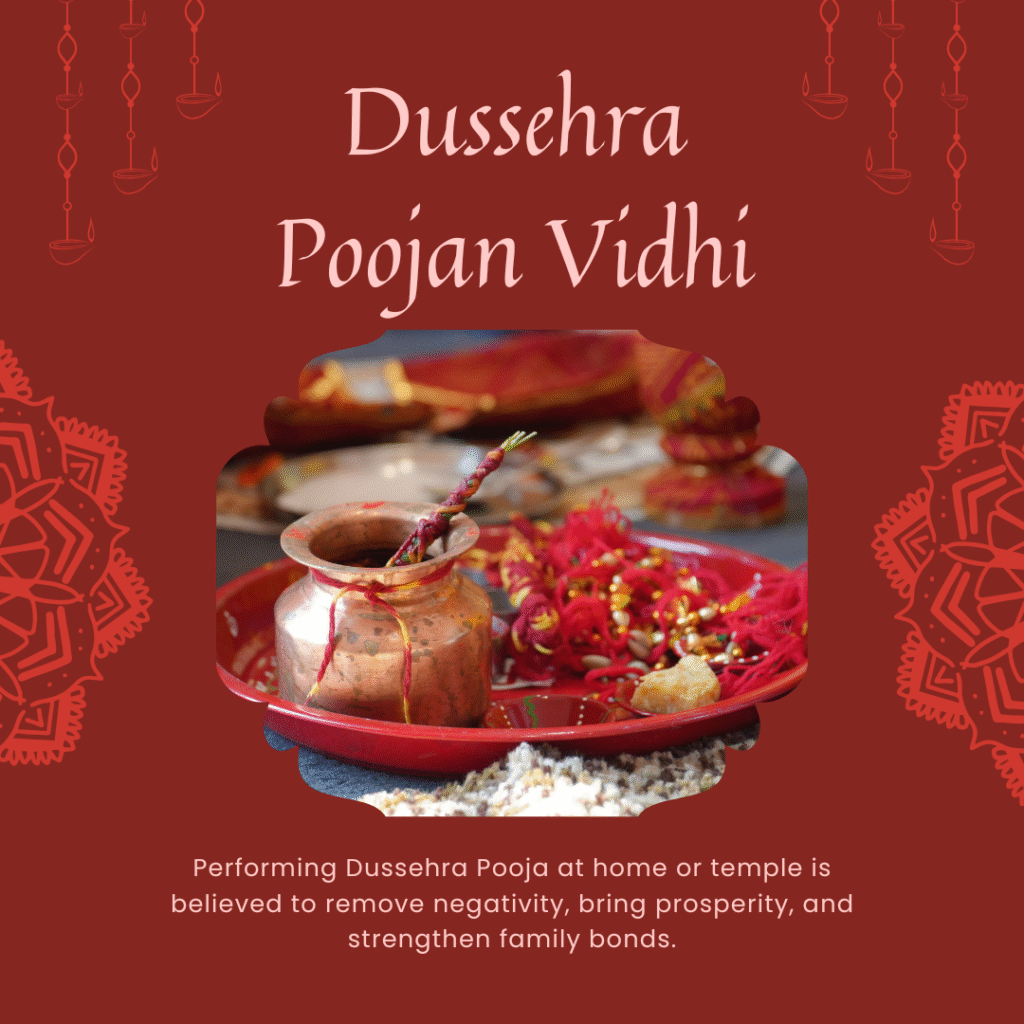
Performing Dussehra Pooja at home or temple is believed to remove negativity, bring prosperity, and strengthen family bonds.
Step 1: Preparation
Clean your home and puja space. Place an idol or picture of Durga Maa or Lord Rama. Keep flowers, fruits, sweets, rice, turmeric, incense sticks, diya, and Kalash ready.
Step 2: Kalash Sthapana
Place a Kalash filled with water, topped with mango leaves and a coconut. It symbolizes energy, abundance, and protection.
Step 3: Invocation (Aavahan)
Light diya and incense. Chant mantras such as Durga mantra, Ram stuti, or Gayatri mantra.
Step 4: Offerings (Naivedya)
Offer fruits, sweets, coconut, flowers, and bel leaves. In Bengal, fish and sweets are also offered to Durga Maa in some traditions.
Step 5: Story Reading (Katha Vachan)
Read Ramayana passages about the Rama-Ravana war or verses from Devi Mahatmya about Durga-Mahishasura.
Step 6: Aarti and Prasad
Perform aarti with diya, singing bhajans. Distribute prasad among family, neighbors, and children.
Step 7: Visarjan (Immersion/Goodbye Ritual)
Symbolically bid farewell to Maa Durga or burn Ravana effigy. At home, immerse a small idol or flower in water, praying for renewal and peace.
Beliefs and What People Gain from Dussehra Pooja
- Removal of Negativity: Burning Ravana or immersing Durga idol symbolizes leaving behind ego, anger, and pride.
- Victory and Courage: Worship strengthens the belief that truth and righteousness always win.
- Prosperity: Shami leaves (apta) are exchanged as symbols of gold, attracting wealth.
- Blessings of Shakti: Durga Pooja brings divine feminine energy, balancing strength and compassion.
- Unity and Respect: Families gather, touch elders’ feet, and exchange sweets.
- Knowledge and Growth: In South India, worshipping books, tools, and instruments is believed to bring wisdom and success.
Traditions and Rituals of Dussehra
Ravana Dahan
Effigies of Ravana, Meghnath, and Kumbhkaran are burnt with fireworks to mark Rama’s victory.
Poojas and Beliefs
- Ayudha Puja in South India: Worship of tools, books, and vehicles.
- Shami Puja in Maharashtra: Exchange of apta leaves as gold.
- Ram Leela in North India: Plays depicting Rama’s journey.
Bengali Traditions on Vijaya Dashami
- Sindoor Khela: Married women smear each other with sindoor.
- Sweet Offerings: Sandesh, rasgulla, and mithai are shared.
- Touching Elders’ Feet: A gesture of blessings before Visarjan.
Visarjan (Immersion Rituals)
Idols of Durga and Ganesha are immersed in rivers, symbolizing return to the cosmos and renewal of life’s cycle.
Who Celebrated Dussehra First? (Historical Truths)
- Ramayana Era: Believed to be first celebrated when Rama defeated Ravana.
- Devi Mahatmya (Markandeya Purana): Story of Durga’s victory over Mahishasura.
- Vedic Age: Dashami was tied to harvest festivals and warrior rituals.
- Regional Dynasties: Kings of Mysore and Kullu institutionalized Dussehra as a grand public festival centuries ago.
Regional Rituals and Traditions (Quick Recap)
- North India: Ravana Dahan, Ram Leela.
- Bengal: Sindoor Khela, sweets, Durga Visarjan.
- Maharashtra: Shami Puja, apta leaves as gold.
- South India: Ayudha Puja, Saraswati Puja.
- Himachal/Kullu: Deity processions and community worship.
Why These Stories and Rituals Matter Today (A Mindful View)
- Ravana’s story teaches us to conquer ego.
- Mahishasura’s defeat reminds us of courage and feminine strength.
- Durga’s farewell emphasizes family bonds.
- Visarjan reminds us of impermanence and renewal.
At Mindful Mumma Nest, we believe festivals are not just rituals—they are mindful lessons to live with wisdom, balance, and love. Just as Dussehra destroys inner negativity, Mindful Mumma Nest is your nest of care, guiding you with:
- Mindful Path
- Mindful Parenting
- Mindful Strategies
- Mindful Knowledge and Guidance
- Mindful Earning Ideas
FAQs on Dussehra
Q1. Why is Dussehra called Vijaya Dashami?
Because it falls on the 10th day (Dashami) and marks victory (Vijaya) of good over evil.
Q2. Is Dussehra only about Ravana?
No, it is also about Durga’s triumph, harvest traditions, and community rituals across India.
Q3. What is the meaning of Sindoor Khela?
It is a Bengali tradition where married women celebrate strength, prosperity, and sisterhood.
Q4. Why do we do Visarjan?
It symbolizes that everything material returns to nature, teaching detachment and renewal.
Q5. What is the Pooja Vidhi for Dussehra at home?
Prepare the puja space, set up Kalash, worship Durga or Rama, offer sweets and flowers, read sacred stories, perform aarti, and distribute prasad.
Q6. What benefits are believed from Dussehra rituals?
Prosperity, victory in struggles, wisdom, family unity, and protection from negativity.
Best Sources and Tools
- Markandeya Purana – for Devi Durga’s story.
- Ramayana & Valmiki Ramayana – for Rama’s story.
- Kullu & Mysore Dussehra Records – historical sources.
Cultural Anthropology Journals – for regional traditions.