Turkey’s Early Contribution to Children’s Day
Nehru’s Vision and Roots of the Celebration
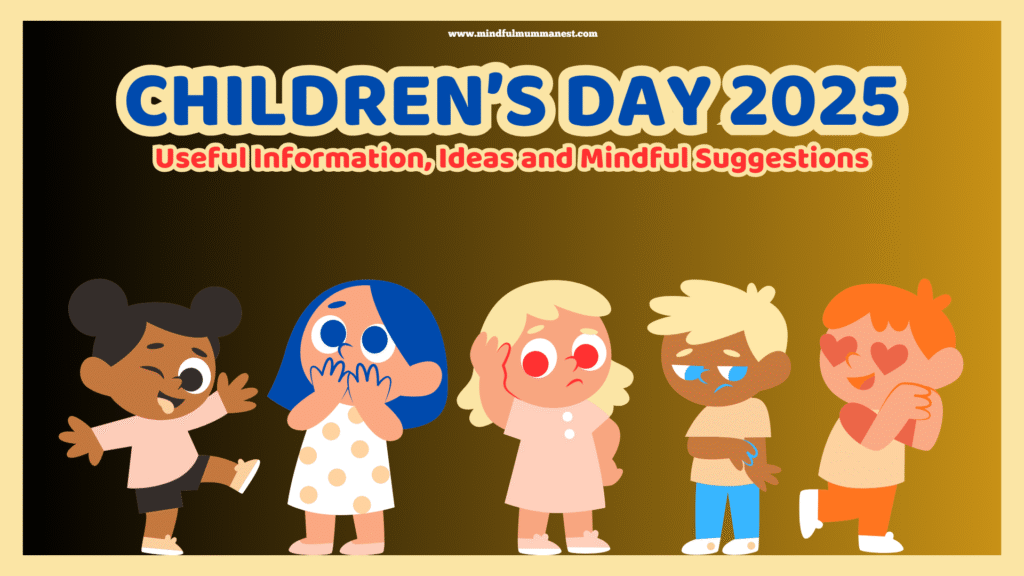
Every year on 14th November, India celebrates Children’s Day — a day filled with innocence, joy, and deep hope. This occasion is not simply a celebration; it is a reminder that every child deserves every right, every opportunity, and every bit of love we can offer.
At Mindful Mumma Nest, our vision is to create a world where children grow with emotional safety, confidence, equality, and mindful guidance.
Children’s Day 2025 falls on a Friday, allowing families and schools to create meaningful experiences for children across the country.
Why We Celebrate Children’s Day: History, Heart and Humanity
Roots
Children’s Day in India honours the birth anniversary of Pandit Jawaharlal Nehru, whose affection for children and belief in child-centered education shaped India’s early learning culture.
Values
Globally, Children’s Day was established in 1954 to promote welfare, equality and unity for children worldwide.
Vision
Nehru’s books, “Letters from a Father to His Daughter” and “Glimpses of World History,” highlight the belief that children flourish when knowledge reaches them with warmth and simplicity.
Learn more:
UNICEF – Children’s Rights: https://www.unicef.org/child-rights-convention
UNESCO – Inclusive Education: https://www.unesco.org/en/education
A Global Perspective: Turkey, One of the First Nations to Celebrate Children’s Day
Establishment
Turkey was among the first countries in the world to officially recognize and celebrate Children’s Day. In 1929, Mustafa Kemal Atatürk formally established April 23rd as Children’s Day, making it a national holiday. This was years before many countries, including India, began formal celebrations.
Historical Context
The date was not chosen randomly. April 23rd, 1920 marks the founding of the Turkish Grand National Assembly — a powerful symbol of national sovereignty. By linking Children’s Day to this historic moment, Turkey reinforced the idea that children are the protectors and inheritors of national strength.
Significance
Turkey’s celebration, known as “National Sovereignty and Children’s Day,” was created to honor children as the future of the nation. In Turkey, children participate in cultural programs, leadership activities, and even symbolically take seats in the parliament for the day. This teaches them leadership, responsibility and a sense of pride in their country’s democratic identity.
Turkey’s example shows how deeply a nation can value its youngest citizens — not just through celebration but through empowerment and inclusion. It is a reminder to the world that when we invest in children, we invest in a stronger future.

Theme 2025: For Every Child, Every Right
Equality
A child’s future should not depend on money, background or social labels.
Safety
Every child deserves physical, emotional and digital protection.
Dignity
Children should have equal access to schooling, healthcare and opportunities.
This theme aligns strongly with Mindful Mumma Nest’s mission of supporting mindful homes, empowered mothers and emotionally strong children.
How Children’s Day Began in India
Beginning
The first Children’s Day in India was celebrated in 1948 as “Flower Day.”
Growth
Flower tokens were sold to raise funds for the United Nations Appeal for Children.
Purpose
By 1949, the celebration had spread widely, reflecting India’s growing commitment toward child welfare.
Government reference:
Ministry of Education, India: https://www.education.gov.in/
Creative, Heartfelt Ways to Celebrate Children’s Day 2025
Teacher–Student Role Reversal
Empathy
Teachers become students for a day, experiencing the classroom from a child’s perspective.
Laughter
Switching roles encourages fun, breaks rigid structures and brings joy.
Unity
The activity ends with teachers sharing how it felt to be a student again, strengthening bond and respect.
Picnic or Outdoor Trip
Freedom
A simple outing to a garden, museum or nature spot creates fresh memories.
Joy
Children feel lighter and more connected outside the classroom.
Exploration
Outdoor surroundings encourage curiosity and natural learning.
Secret Wish Box – One Wish Comes True
Voice
Children anonymously write a wish for a rule or change they want for a day.
Expression
Their wishes may include extra games, no homework, teachers dancing or learning outside.
Trust
Fulfilling even one wish shows that their ideas matter.
Winter-Friendly Fun Instead of Pool Party
Warmth
Replace water fun with a winter carnival.
Creativity
Activities include bonfire storytelling, hot chocolate, sock decorating and indoor games.
Celebration
A warm winter dance under fairy lights keeps the day festive, safe and memorable.
A Day with No Scolding — Only Love and Encouragement
Care
Children need understanding more than discipline. They thrive when adults guide gently.
Listening
Parents must listen to their children’s doubts, especially today when phones and online content can confuse or mislead them.
Healing
Let the day be filled with acceptance, conversation and emotional safety.
Teachers can wear badges saying:
“Today, I only spread love.”
To explore mindful parenting and emotional learning, visit:
Mindful Mumma Nest: https://mindfulmummanest.com/
What India Can Learn From Abroad: A Vision of Education Equality
Inclusion
Countries like Finland, Canada and Germany allow children to attend any school within 3 to 5 km of their home — without class or income barriers.
Access
Children enter school with equal dignity, learning in the same facilities regardless of financial background.
Fairness
This equal schooling system reduces comparison, class divide and social imbalance.
What India Can Do
Upgrade
Improve facilities in both public and private schools to offer equal quality of education.
Unify
Introduce school admission zoning so every child can study in nearby schools without discrimination.
Empower
Create teacher exchange programs, add emotional counselling support and strengthen academic infrastructure.
Government references:
School Education India: https://www.education.gov.in/
PM-POSHAN Scheme: https://www.education.gov.in/pmposhan
Why We Share This on Mindful Mumma Nest
Purpose
To build awareness about child rights, emotional safety and educational equality.
Awareness
To guide parents and educators in understanding the modern challenges children face.
Impact
To inspire communities and schools to create love-filled, fair and mindful environments for children.
Explore more conscious parenting and youth-focused content:
https://mindfulmummanest.com/
FAQs: Frequently Asked Questions
1. Why is Children’s Day important today?
Children face emotional pressure, academic competition and digital threats, making this day essential for reflection and encouragement.
2. What is the theme of Children’s Day 2025?
The theme is “For Every Child, Every Right,” focusing on equality, safety and development.
3. How can parents celebrate Children’s Day at home?
By spending time together, cooking, making memory notes, playing games or granting a small wish.
4. Why is Turkey’s Children’s Day important in world history?
Turkey was the first country to officially establish Children’s Day, linking it to national sovereignty and symbolically empowering children as future leaders.
5. Why is Mindful Mumma Nest sharing this?
To encourage mindful parenting, promote equal education and support children’s emotional well-being.
Sources and Tools
UNICEF – Convention on the Rights of the Child
https://www.unicef.org/child-rights-convention
UNESCO – Education for All
https://www.unesco.org/en/education
Ministry of Education, Government of India
https://www.education.gov.in/
PM POSHAN – School Nutrition Scheme
https://www.education.gov.in/pmposhanMindful Mumma Nest – Parenting and Youth Empowerment
https://mindfulmummanest.com/